Flash Fiction: Looking for Adventuring Party: Dwarf Fighter/Cook

This piece of flash fiction was written for Writer’s Digest’s 2021 February Flash Fiction Challenge Day 18. I spent an hour and a half on this story; this is the third draft. The prompt: “Write someone’s online dating profile.” I can’t even write my own dating profile, so I took a bit of liberty with this prompt. Being in an adventuring party can be a little like dating, so I figured this idea still works. Enjoy!

Image from Pinterest.com

Looking for Adventuring Party: Dwarf Fighter/Cook

Illustration description: An older looking, clean-shaven dwarf man with a broad smile resting under a wide, round nose. His face is full of laugh and worry lines. He stands proudly in what looks to be an expansive underground kitchen filled with wooden counters, iron pots and pans, and giant wood-burning stoves made of carved stone. Peeking out from behind a well-stained tan cooking apron is a shirt of shiny chain mail that falls over his chest and over a potbelly. A shortsword hangs sheathed at his side while he leans on a larger, two-handed maul.

Fargrim Runeheim, 283

Advantages

  • While I’m starting to get a bit on in years for a dwarf, I am still hearty as ever with a strong back. I won’t be going down easy to no constitution afflictions or strength challenges.
  • A life of stirring hearty soups, pounding thick bread dough, and hefting large crates of food and casks of ale have given me plenty of strength to swing my maul something fierce.
  • Spent most of my life up till now cooking and baking. I reckon I can whip up a good meal most days while traveling the roads between towns and trekking through the wilderness. 

Disadvantages

  • I’m like my grandmum: I hate not seeing people eat, and I tend to force food onto people even if they don’t want it.
  • My hearing is not so great. I also need reading glasses now. 
  • Not much of a fan of magic. Damn wizard once came into the kitchen and started casting spells. “To help,” he said. Lotta help he did. The bread morphed into golems that had mean right hooks; damn shepherd’s pie turned into a slime monster; the dumplings started popping off like fireballs; the spaghetti pasta tried strangling people. Magic ain’t worth the bloody hassle, I tell ya.

The life of a cook in Belnor’s Deep has been good to me. It put food on the table—pun very much intended—and gave me a comfortable life. The job helped me understand how integral food is in forming friendships and helping people through the toughest of times. But I’ve been restless for a few decades now. Looking to try something new. Can’t think of a much better way to spend some of my later years than adventuring around helping people. I promise, I’ll keep us well fed and have your back. If we get into a scrap, I’ll just imagine our foes insulted my chicken pot pie. The fury that shall descend upon them will be legendary.

Flash Fiction: How To GM Your First D&D Session

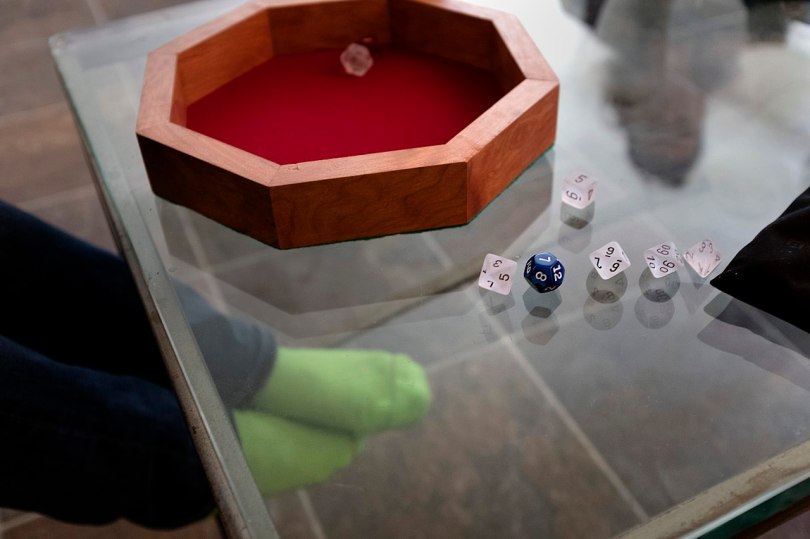
This piece of flash fiction was written for Writer’s Digest’s 2021 February Flash Fiction Challenge Day 17. I spent an hour and a half on this story; this is the third draft. The prompt: “Write a second-person how-to.”

Image from Wikimedia Commons, Robert Couse-Baker from Sacramento, California.

How To GM Your First D&D Session

So you want to Game Master a Dungeons and Dragons game?

That’s fantastic! Welcome to the Game Mastering fold. We are lucky to have you. 

“So, where do I start?” you ask.

Do you already own the Player’s Handbook?

“Yes!”

Wonderful!

Do you already have a group of friends and family to play with?

“I do. And we’ve all already learned the basic rules.”

Awesome! You’re already rolling along nicely.

Well, as this is your first time GMing a D&D game, it’s recommended you start out simple: pick up one of the official pre-built adventures released by Wizards of the Coast. These pre-build adventures are expertly crafted and serve as a fantastic introduction to adventure structure. Give the book a quick read-through to familiarize yourself with the broad details of the adventure. 

Have you finished?

“Yes, but the book mentions creatures in the Monster Manual and some stuff in the Dungeon Master’s Guide. Should I buy those books as well?”

Not just yet. Chances are you can easily google those creatures and anything else the adventure mentions. The Internet is a treasure trove of useful information for GMing D&D and most of the time no dragons are guarding it. For now, let’s just get you going on your first game before investing in more D&D books—there are a lot of them and it can get a bit pricey. 

Now that you’ve familiarized yourself with the adventure, it’s time to prepare for your Session One—we’ll go ahead and leave Session Zero for a future adventure; let’s keep on keeping things simple for now. 

Reread the first chapter of the adventure book and follow their recommendations on preparing. After that, write up some notes for the first session. These notes can be handwritten or done on the computer; you can print them out or use a mobile device or laptop; whatever method works best for you. Do try to keep the notes fairly short and free of extraneous details, no more than two pages if possible. 

For this first session, don’t worry about battle maps or minis. For combat, go with Theatre of the Mind, where everything happens in yours and your players’ imaginations. It’ll require a bit of extra effort on your part to clearly communicate where all the Player Characters are, as well as the Non-Player Characters and environmental obstacles. It can get difficult to keep track of it all as the combat progresses and the details can get muddy, so it might be handy to keep some pencils and graph paper around to quickly sketch things out if need be. You can do it though. Have faith!

“Alrighty,” you say. “I’m ready. I got my session notes. I’ve got my dice. I’ve got graph paper. I’ve memorized all of chapter one.”

Is this an in-person D&D game?

“Yes.”

Then don’t forget to pick up some snacks or tell the players to bring their own. After all, this is a social game with good friends and family. It’s a wonderful guilt-free excuse to binge on junk food.

“That’s a great idea!”

Thank you!

Okay, so, you’ve gathered all of your players together and everyone is arrayed around the table with their character sheets, dice, and favorite junk food snacks. You’ve positioned yourself behind the GM screen with your own dice, snacks, and session notes. 

You are ready to go!

Start out by introducing the adventure, giving some detail on the setting and recent local events. Describe the location the Player Characters are starting in and what they are all currently doing. Have the players introduce their characters, brief descriptions of appearance and disposition. Afterwards, progress to the inciting incident as detailed in the adventure book. 

And it is here this guide shall leave you to it. Good luck and have fu—

“Uh-oh.”

What is it?

“Well, the player playing the mad gnome warlock just killed the supposed-to-be-friendly-ally NPC. The NPC was supposed to give them vital information on where to go next.”

Ah yes, early onset Murder Hobo Syndrome. An unfortunate common affliction amongst D&D players. You must now embark on the most harrowing of challenges any GM will face in a game of D&D: improvisation, the skill of making creative decisions on the spot, the art of yes-anding, the bailiwick of bullshitting. In other words, go with the flow, roll with the punches, do your best, and see what happens. 

Don’t worry, you’ll be just fine. At the very least, you and your players will have a hilarious story to reminisce about later. 

Best of luck and have fun!

Flash Fiction: The Moment

This piece of flash fiction was written for Writer’s Digest’s 2021 February Flash Fiction Challenge Day 16. I spent two hours on this story; this is the third draft. The prompt: “Write about boring becoming something exciting.

Image from Wikimedia Commons, Nazareth College from Rochester, NY, USA.

The Moment

It was my first day on the job and the first Monday of the local school district’s Summer Break when James and his mother, Patricia, walked into the library.

James immediately trudged to the nearest seat, plopped down, crossed his arm, and sulked low into the piece of furniture hiding behind long, curly black bangs. Patricia marched to the counter, an embarrassed smile plastered on her face. After introductions, she explained James was in middle school, seventh grade going on eighth, except there was a teeny, tiny hiccup: he’d failed to do any of the reading assignments all year. If he wanted to move onto the next grade, he had to complete the readings over the summer—ten books and ten book reports. 

So Patricia brought James here to the local library because what better place to read and then ponder what you read before tossing those musings into a report on said book. It was also a safe place that didn’t require a fee where James could stay out of trouble and focus on his schoolwork—this Patricia did not say out loud, but her guilty expression gave it away. 

“He’s more than welcome here amongst the stacks of adventure and possibility,” I said, patting the air and giving Patricia what I hoped was a reassuring smile. 

And so every day that summer Patricia dropped James off at the library. 

That first day, James sulked in the chair, never once getting up. As the day progressed, it was not difficult to tell the boy was bored out of his mind. Even still, he refused to move and refused to read. I let him play out the role of obstinate, angst-ridden teenager and went about my day restocking the bookshelves, helping other visitors, and cleaning up here and there. I checked up on him every so often, occasionally finding his eyes wandering the stacks near him. Whenever he noticed me, he’d quickly refocus on the floor and tighten his crossed arms.

He did get up thirty minutes before Patricia was due back. He shuffled over to where I was sorting through a few boxes of donated books and handed me a wrinkled piece of notebook paper. A numbered list of twenty books and their authors were written on it.

I raised a questioning eyebrow at him.

“The books Mr. Waters recommends I choose from to read.”

I frowned. Mr. Waters was an old curmudgeon of an English teacher, even back when I had him ten years ago. His taste in literature was very . . . classical. And the list reflected such tastes. Meaning, it was a bunch of old books about a bunch of things set in times a boy James’s age probably would not give a damn about. 

“Which book do you want to read first?” I asked. 

He shrugged. “Don’t care. The first one on the lists, I guess?”

I quickly retrieved the book and handed it to him. If disinterest could destroy, then the book would have been nothing but individual atoms with the look James gave it. He returned to his seat, flipped the book open to page one, and that is where it stayed until Patricia picked him up. It stayed on the same page the following day, and the day after that.

“Do you like reading?” I asked him on the fourth day. 

“Not really. It’s boring.” It took him ten full seconds to realize who he just said that too. “I-I mean, for me, reading is, you know, boring. But for you, it’s probably the greatest thing ever, being a librarian and all. And I’m sure other people like it to . . .” 

He looked away, his cheeks and ears turning red. It took everything I had not to bust out laughing.

“I do rather enjoy reading,” I said with a smile, sitting down at the seat across from him—he’d finally migrated to more comfortable seating in one of the reading nooks the previous day. “So if not reading, what do you like?”

He shrugged.

I waited, drawing out the one-sided awkward silence until he finally cracked.

“TV, I guess. Video games.”

“What kind of TV do you watch? What kind of video games do you play?”

After a moment of hesitation, he rattled off a dozen television shows and a half dozen video games. He rounded out the list with a few movies. 

Sitting back, I said, “Hmm . . .”

I was familiar, at least superficially, with everything he listed off. There were a few broad through lines with them all: action, adventure, and a dose of violence—more than what Patricia was probably aware of if I had to guess. But there were a few more subtle things I identified: science and technology obviously interested him; mystery about what existed beyond the bounds of our planet and solar system; a desire for excitement and nail-biting suspense; history of different cultures and people and their past conflicts with others. 

“Alrighty,” I said, hopping to my feet. “I think I can help you. One moment.”

I strode off into the stacks over to the science-fiction section. I quickly discarded classic sci-fi—there’s no quicker way to drive someone away from science fiction literature than forcing them to read the classics which could be overly dense, meandering, and lack relatable characters. Those can come later. For now, something more modern was needed, something more recognizable and relatable. Then I spot it: a sci-fi book published four years ago set in the future that follows an ensemble cast of found family characters who journey across the stars and come into contact and conflict with all manner of strange, unique aliens. 

“Yes, this should do nicely.” 

Emerging from the stacks, I returned to James and handed him the book. 

Studying the cover, he frowned. Then he read the synopsis on the back of the book, and the frown transformed into an expression of curiosity. 

“Why don’t you give that book a chance. I think you’d like it.”

He didn’t answer immediately. He frowned again, struggling with something. Finally, he said, “This isn’t on Mr. Waters’s list.”

“Are you only allowed to read from those twenty books? I thought they were simply recommendations?”

“They are but . . .” He stared down at the book and reread the back. “I don’t think this is the kind of book Mr. Waters would like.”

“Probably not, no. But Mr. Waters’s is not the one that’ll be reading it. You will. So it only matters if it’s a book you’d like to read. Do you think you might enjoy reading this book?”

James stared at the paperback, face scrunched up, the gears in his head turning. 

“Maybe?” he finally said.

“Only one way to find out,” I said.

Giving me one more confused, unsure look, he nestled in the chair and opened the book to the first page. Then he began reading.

I walked away to give him some space, but I kept a close eye on him. 

The moment happened on page six. It is plain as day on his face—mouth slightly open, eyebrows scrunched together, face a little closer to the book than it was before. It’s the moment all of us who enjoy reading know well, the moment we all crave, the moment we are all addicted to, the moment we wished would never end; it’s the moment where reality falls aways, replaced by the speculative reality springing forth from the pages; it’s the moment where the characters become real, the moment the mystery of the plot fills us with an intense desire to see it solved, the moment the setting erupts in our minds in an explosion of color and form; it’s the moment of pure, utter bliss when the reader and the book merge into one.

James settled back in the chair even more, completely relaxed and no longer existing in this reality. 

Smirking, I disappear into the stacks and leave the young man to his moment.

Flash Fiction: UNTITLED

This piece of flash fiction was written for Writer’s Digest’s 2021 February Flash Fiction Challenge Day 15. I spent two hours on this story; this is the third draft. The prompt: “Write someone who needs to take a deep breath.”

Image from geograph.org.uk

Untitled

TEXT REMOVED! I am attempting to revise this flash fiction piece into something I intended to submit for publication.

Flash Fiction: Just Friends

This piece of flash fiction was written for Writer’s Digest’s 2021 February Flash Fiction Challenge Day 14. I spent two hours on this story; this is the third draft. The prompt: “Write about platonic (non-romantic) love.”

Image from bowlingalleyusa.com

Just Friends

A thunderous BANG echoes through the alley, followed by a dozen loud thuds. Another strike!

Jessica cheers behind me and our four opponents groan. 

I turn and fist pump the air. Loud bangs and skids of other bowling balls being tossed down neighboring alleys reverberate around me as I stroll to the ball return. Jessica and I high five and do a little hip bump in celebration. Like always, we are crushing it. Then I go over to the seat where Mary Sue sits.

“Well done, babe,” she says and kisses me full on. While taken aback—Mary Sue is usually pretty modest when it comes to public displays of affection—I go with it. She tastes like strawberry flavored pepperoni pizza.

“Why do we always let Jessica and Evan be on the same team?” Rhonda asks, head in her hands. Next to her, Kenji shakes his head.

Freeing myself from Mary Sue’s aggressive mouth—I’m going to need to ask her about this later—I say, “Because you guys aren’t evil enough to deny two best friends from teaming up.”

“Maybe we should be,” Kenji says, thoughtfully. “Maybe then the rest of us would stand a chance of winning for once.” Rhonda nods, crossing her arms over her chest.

“Ten minute break guys?” Jessica asks. She and her boyfriend Patrick have already stood and begun walking out of our lane’s pit.

We all agree and scatter off to different corners of the bowling alley; some of us go use the restroom while others refill drinks and refresh our orders of nachos and pizza.

Fifteen minutes later, Mary Sue, Rhonda, Kenji, and I are back in the pit digging into the fresh food and drinks. I scan the alley but can’t spot Jessica and Patrick anywhere.

“You guys see where Jess and Patrick went off to?”

Mary Sue shrugs and Kenji shakes his head. 

“I saw them walk out to the parking lot when we first took our break,” Rhonda says, her mouth half full of nachos. 

I roll my eyes but smile. Sighing overly dramatically, I stand and say, “I’ll go get them. They can suck face all they want except when we have an important game to win.” 

Bits of nachos burst from Rhonda’s mouth, Kenji snickers, and Mary Sue shakes her head. I laugh and walk out of the pit. Mary Sue rushes after me.

“I’ll join you,” she says, smiling and linking our arms together. 

I return the smile, and we quickly make our way out the front door of the bowling alley. Washington’s evening air is freezing and bites at my exposed skin. Echoes of yelling fade.

I turn. Jessica is a dozen feet away, standing next to the wall of the bowling alley. Patrick is stalking away from her into the parking lot. Frowning, I start making my way to Jessica.

What the hell just happened?

Patrick spots me and scowls. “You win, asshole. You happy? You fucking win. You can have her. Fucking unbelievable.”

I halt and look from Patrick to Jessica. She looks away. 

Oh shit! Not again. 

I turn to Mary Sue, and ask, “Can we have a few minutes?” 

She nods, her mouth tight, and walks back into the alley.

I resume walking. Patrick’s mustang fires up and peels out of the parking lot. I reach Jessica. 

She shrinks to the ground, her back to the wall. Her eyes are red and puffy and wet. 

I slide to the ground next to her and lean lightly against her shoulder, trying to offer some small, familiar comfort.

Minutes pass in silence before Jessica says, “I thought he got it. I thought I finally found someone that really got it. He said he did. Said he’d never be jealous of you, of us. Turns out, he only thought he could do that. He couldn’t.”

I nod. I want to put my arm around her, pull her in, comfort her, as all best friends should do. But I resist. Doing that didn’t go well the last time.

“He was no different than Paul, or Miguel, or Stuart,” she continues. “Why does this keep fucking happening to me?”

I shake my head. “You’ll find someone too. Someone who understands.”

She scoffs. “I’m starting to believe that’ll never happen. You’re so lucky Mary Sue gets it.”

Silence descends on us again. Jessica sniffles and stares up at the stars. I fiddle with a piece of concrete on the ground.

“I’m sorry,” I finally say, not knowing what else to say.

Jessica closes her eyes and shakes her head. “It’s not your fault.”

“It feels like it is though.”

“Well it’s not! So just drop it.” 

I snap my mouth shut, look away, and scoot apart a few inches. Jessica rarely loses control like that.

Jessica sighs. “I just need to be alone for a bit, okay. Please.”

I nod before climbing to my feet and shuffling away. Just before heading in, I look back at my best friend since kindergarten when she saved me from a bully by shoving him into the sandpit. She was looking back up at the stars. 

I hate not being able to help her. I hate that our friendship is the cause of her pain.

Walking back into the alley, I nearly bowl over Mary Sue. I start mumbling an apology but come up short. Mary Sue is looking at me with a piercing, accusatory gaze. 

“Did you kiss her?” she asks.

My mouth drops open and my brain stops working. After a few confusing moments, realization dawns on me. I crumple to a nearby bench and bury my head in my hands.

Why the fuck to do people find it so hard to believe Jessica and I are just friends?

Flash Fiction: UNTITLED

This piece of flash fiction was written for Writer’s Digest’s 2021 February Flash Fiction Challenge Day 13. I spent three hours on this story; this is the third draft. The prompt: “Write about the weather.”

UNTITLED

TEXT REMOVED! I am attempting to revise this flash fiction piece into a full short story with the intention of submitting it for publication.


Image is from Pixabay

Flash Fiction: Bad Memory Spaghetti

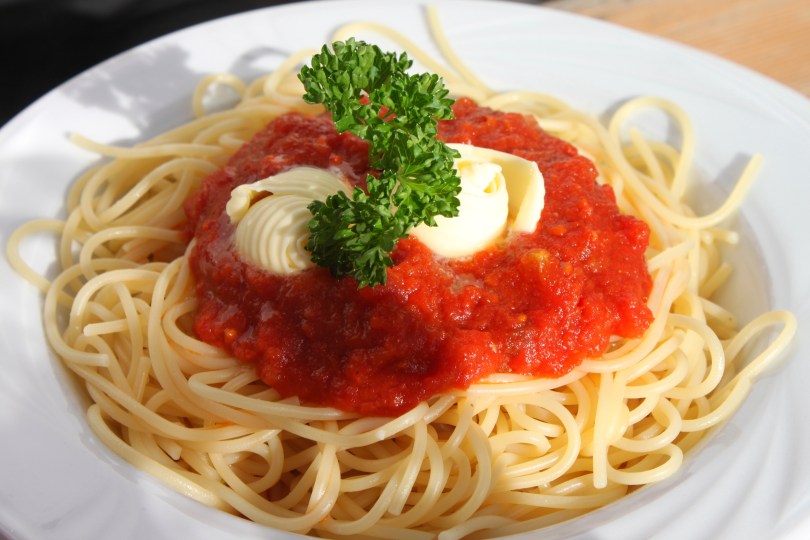
This piece of flash fiction was written for Writer’s Digest’s 2021 February Flash Fiction Challenge Day 12. I spent two hours on this story; this is the third draft. The prompt: “Write about a food you (or your character) hate.

Bad Memory Spaghetti

Monique trudged up the last flight of stairs to the tenth-floor apartment she shared with Olivia. Fishing the keys from her bag, she said, “Why’d I get into the IT industry?” Just like the last twelve weeks, this week had been hell, and next week looked like it was going to be more of the same. 

“I’m not working another weekend,” she declared with little enthusiasm as she unlocked the door and stepped into the apartment. “Hey sweetie, I’m ho—”

The aroma of freshly made spaghetti smacked her in the face, immediately followed by overwhelming nausea that nearly caused her to collapse. An old memory battered against the barred door that kept it at bay.

Somehow the soft wafting through the apartment jazz broke through the dense fog of nausea. The lights were off. Instead, dozens of large white candles burned with tiny flickering orange flames. Olivia shuffled out of the kitchen wearing a very sexy black dress. 

“Hey, love,” Olivia said, brushing her hands down the dress. “I thought I’d surprise you with a—Monique? Are you okay?”

Swallowing hard, Monique asked, “Is that spaghetti?” It was a stupid question. Only spaghetti made her sick feel this way.

“Yes,” Olivia said, stopping next to her. “I thought it would go good with the red wine your mom gave us at Thanksgiving and be a nice romantic meal for a date night. Is that—Monique?”

Monique pushed past her girlfriend, dropping her bag and rushing for the bathroom. She couldn’t hold it back any longer. Their apartment was tiny—a good thing for once—and so she made it to the land of the porcelain gods quickly. She threw herself to the floor, lifted the lid, and vomited. 

The memory from so long ago broke free. She heard Olivia’s voice, but it sounded far off and fading. A soft touch pressed against her back, but it was feather light, almost like it wasn’t there there at all.

The memory overwhelmed her.

#

Monique loved spaghetti. 

Spaghetti was the greatest food in the world. Nothing tasted better. Tonight’s batch was especially good. And Dad had made so much of it. Monique was on her fourth bowl! Normally Mom and Dad wouldn’t let her have so many helpings, but tonight they did. She didn’t even have to eat any vegetables beforehand. 

After finishing her bowl, Monique patted her tummy with small, black hands whose nails sported purple polish. She and Mom had had a Girl’s Day, and Mom painted her nails for the first time.

It had been such an awesome day. 

And then both her parents looked at her strangely. They looked sad, but also worried, and they were fake smiling. Their bowls of spaghetti were half finished but long forgotten.

Something was wrong. 

“Monique,” Mom said. “We need to tell you something.” 

Dad nodded, avoiding eye contact with Monique. 

Monique’s spaghetti-filled stomach suddenly didn’t feel so good. 

“What is it?” Monique whispered. 

Mom looked at Dad and Dad sighed. 

“Your mother and I, well, you see . . . it’s complicated. We are, that is, what I mean is-Christ! I don’t know how to say this.”

Mom glared at Dad before turning back to Monique. “Your father and I are getting a divorce.”

Monique’s stomach roiled. “But you and dad love each other. You can’t be divorced.”

“We do love each other . . . just, not like before,” Dad said, as if that somehow magically explained everything to a seven-year-old. 

Monique shook her head. It was too much. It didn’t make sense. Her stomach rose and the taste of regurgitated spaghetti sauce swelled in her mouth. She pushed away from the table, tumbled out of the chair, and scrambled to the bathroom. She threw herself to the floor and vomited in the toilet.

#

That terrible day faded. 

Monique still leaned over the toilet, the coagulated contents of her lunch floating in the water. A loving hand rubbed slow circles on her back. 

“I’m sorry,” Monique said, her voice hoarse. 

“What for?” Olivia asked. “For being sick? You don’t have to apologize for that.”

Monique shook her head. She should have explained it. It was simple enough. Instead, she growled, “I hate spaghetti.”

The hand rubbing circled stopped briefly before continuing. “Oh . . .”

The bathroom fell silent.

After a few minutes, Monique flushed the toilet, rose to the sink, and washed her mouth out with water. She could see Olivia standing in the mirror. She looked confused, concerned, and a little hurt. 

“I didn’t know. I’m sorry,” Olivia said, staring at Monique’s back.

Monique’s chest tightened and shame replaced the nausea in her stomach. She turned and took Olivia’s hands. She kissed them. 

Then she took a deep breath.

“We had spaghetti the night my parents told me about their divorce,” Monique said. “I got sick that night too. Every time I smell spaghetti, I get nauseous. You didn’t know about it because I don’t like to talk about it, my parents, their divorce. It . . . was a bad time.”

Olivia nodded. The hurt was gone, replaced with understanding and sympathy. Though there was still a little confusion. Monique had a feeling what that was about.

She kissed Olivia’s hands again. “I should have told you, though. We’re partners. I’m sorry.”

Olivia nodded again, her red curls bouncing. “Apology accepted.”

“I stopped by Carmen’s on the way home,” Monique said after a moment of silence.

Olivia’s eyebrow rose.

“Picked up your favorite chocolate brownies,” Monique said, smiling. “Those should go good with the wine, yeah?”

Olivia’s eyes lit up, and she laughed. “They will. But first, let’s get rid of the spaghetti. It is officially banished from our home.”


Image from Wikimedia Commons

Flash Fiction: Grandpa’s Holiday

This piece of flash fiction was written for Writer’s Digest’s 2021 February Flash Fiction Challenge Day 11. I spent two hours on this story; this is the third draft. The prompt: “Write about a holiday.

Grandpa’s Holiday

I was waiting at the bus stop listening to Maria and Jonas argue about which Pokemon was the most powerful when Grandpa’s tan car pulled up. 

He rolled down the windows, smiled at the three of us, and said to me, “Hey Lindsey. How are you doing today, kiddo?” 

“I’m doing okay, Grandpa.” Maria and Jonas looked at me, confused. I shrugged. Sometimes Grandpas just showed up. I walked up to the car. “What are you doing here?”

“I came to pick you up.” Grandpa was short but broad shouldered with a round, clean-shaven face topped with a gray buzz cut. He was always happy and smiling.

I tilted my head. “But I have school today.”

“Not today,” he said, shaking his head. “Today’s a holiday.”

“It is?”

“Yep.” He nodded to the backseat. “So hop on in. We have a fun day ahead of us.” 

I looked back at Maria and Jonas. They shrugged. I hopped in the car, putting my backpack on the neighboring seat. Grandpa and I waved goodbye to Maria and Jonas before driving away. 

“So what Holiday is it?” I asked after we’d turned onto another street. Mom didn’t say anything about a holiday, and neither did Maria or Jonas. Summer was over so it wasn’t 4th of July. Halloween was two weeks away. Columbus Day had come and gone, though we didn’t celebrate that holiday.

“It’s a very special holiday,” Grandpa said. 

That wasn’t helpful. Sometimes grandpas are unhelpful like this. 

A few minutes later, he glanced at me in the rearview mirror and asked, “You ever been to the game shop on Main Street?”

I shook my head. Mom didn’t like Main Street. “Driving down there is a nightmare,” she always said.

“Well, you are in for a treat. I used to go there all the time as a kid with my friend. We’d play card and board games for hours and hours. Kept us out of trouble, which let me tell you, my friend and I got into all sortsa trouble when we weren’t in that game shop.”

I nodded. It made sense. Mom always said Grandpa was a handful. 

So we went to O’Connor’s Games Shop, owned and operated by the O’Connor family since 1959. At least that’s what the woman who ran the store said when we arrived. We spent a few hours there. I taught Grandpa how to play Settlers of Catan, and we played it with the owner lady and her husband—neither of them mentioned why they were working on a holiday or why all the other shops on Main Street were opened too. With the largest army and longest road for the army to march on, I won the game.

After promising to return soon, Grandpa and I left and returned to the car. 

“Next up: the movies!” Grandpa said, starting the car. 

“What movie are we going to see?”

“That new animation film by that lamp company.”

It took me a moment before I asked, “Inside Out from Pixar?”

Grandpa snapped his fingers. “That’s the one!”

I didn’t tell Grandpa that Mom and I already went to see Inside Out back in the summer. I really wanted a cherry slushie. 

Arriving at the theater and after getting a large cherry slushie and an extra large popcorn, Grandpa and I sat in the dimly lit theater waiting for the movie to start. 

“My friend and I used to come to this theater all the time,” he said, smiling. “Whenever we could scrounge up enough change for tickets and popcorn, that is.” He peered at me with a mischievous look in his eyes. “And if we couldn’t do that, we’d sneak in through the back.” He winked. 

The movie started, and the few people in the theater fell silent. The movie was just as good as the first time. The slushie was awesome too! 

Walking out of the theater a few hours later, Grandpa cracked his back. “Don’t ever get old,” he said, wincing. “Or spend an entire career sitting at a desk.”

“I already have a career sitting at a desk.”

His eyebrow rose. 

“It’s called school.”

Grandpa laughed. It was a deep, barking laugh that filled the entire lobby. “You, kiddo, are too young to have such a dry wit. Reminds me of my friend, actually.” Grandpa fell silent as we left the theater and returned to the car. 

“Hungry?” he asked after we buckled in.

I nodded. Unlike Grandpa, I wasn’t a big popcorn fan, so I hadn’t eaten since breakfast.

“I got just the place,” he said, and we sped off. “A burger place over in The Outlets. Me and my friend would race our bikes over there on the weekends. I always won!”

“Course, same people don’t run it anymore,” he continued after a few silent moments. “A chain gobbled it up when I was overseas. Burgers never tasted the same afterwards.”

It didn’t take long to get to The Outlets. Traffic was light today. 

We arrived at the burger place, made our orders, and sat at a booth shooting each other with the paper sleeves covering the straws. Then Grandpa had to use the restroom.

Something was off about today. Something was off about Grandpa. He seemed . . . well he acted happy, but that happy seemed like it was hard for him or something. It wasn’t Grandpa’s normal easy happy.

Our order was announced, so I walked up to the counter to get it from a bored-looking man.

“What holiday is it today?” I blurted.

The man’s face pinched into a frown. “I don’t know. I don’t think it is a holiday. Wish it were. I could be playing video games right now instead.” Then someone else walked up to get their order and I was forgotten.

I returned to our booth and Grandpa came back shortly after. I ate my burger in silence. Grandpa ate his, but he complained about it every other bite; the burger just wasn’t as good as when he and his friend came here.

After lunch, just like Grandpa and his friend would do, we went to the park to play catch and feed bread to the ducks and catch tadpoles—we put them back when we were done.

Then we had soft serve ice cream in a vacant lot. The ice cream came from a cooler in the trunk of Grandpa’s car. “Used to be a soft serve parlor in this lot called Marly’s. Made the ice cream themselves and it was the best in the country. My friend and I would come here and eat ice cream until we were sick. I always got chocolate. He always chose vanilla.”

We went to the river last. From the trunk—Grandpa had a lot of random stuff in there, just like his house—Grandpa pulled out two carved wooden boats. Grandpa enjoyed making things out of wood. “These are just like the boats my friend and I would make,” he said.

We walked down a well-trod path to the river. It had only rained a few times recently, so the river was more of a creek. 

“Stay here, kiddo. Bit dangerous this river is. I’ll just go ahead and release these two boats myself.” 

I stopped.

Grandpa continued walking. 

I frowned. 

“Did you and your friend do this too?” I asked. “Release boats in the river?”

Grandpa froze, his shoulders tensing. He looked back at me, his happy gone. “Yeah. We did.” He turned away and continued to the water’s edge.

Grandpa released the boats and watched them float lazily down the creek for a very, very long time.

Then he took me home. The drive back was silent. 

At mine and Mom’s house, Grandpa walked me up to the door. “I don’t think I’m gonna come in. I suspect your mom won’t be all that happy with me about today.”

“Because today’s not really a holiday?”

“Yeah . . .” He looked down at his toes, his face fallen.

This was wrong. Grandpas were supposed to be happy. Not sad. 

I threw my arms around Grandpa’s torso and squeezed him real, real hard. 

He returned the hug, squeezing me real, real hard. 

We stayed that way for a long time.

“Thank you for the holiday, Grandpa.”

Pulling away, he ruffled my hair. “Thank you, kiddo.” 

He walked back to his car, gave me a wave goodbye, and drove away.

Walking into the house, a very frantic and then very angry Mom greeted me. After telling her I played hooky with Grandpa, Mom said, “You should have told me.” Then she signed and pinched her nose. “No, Grandpa should have told me. He’s the adult.”

“Grandpa was very sad today even though he said it was a holiday.”

Mom frowned. She pulled her phone from a pocket and peered at it. Her eyebrows rose and her mouth became an O. Then she looked sad. “Today is the anniversary of your Grandpa’s best friend, Todd, passing away, after drowning in the river.”


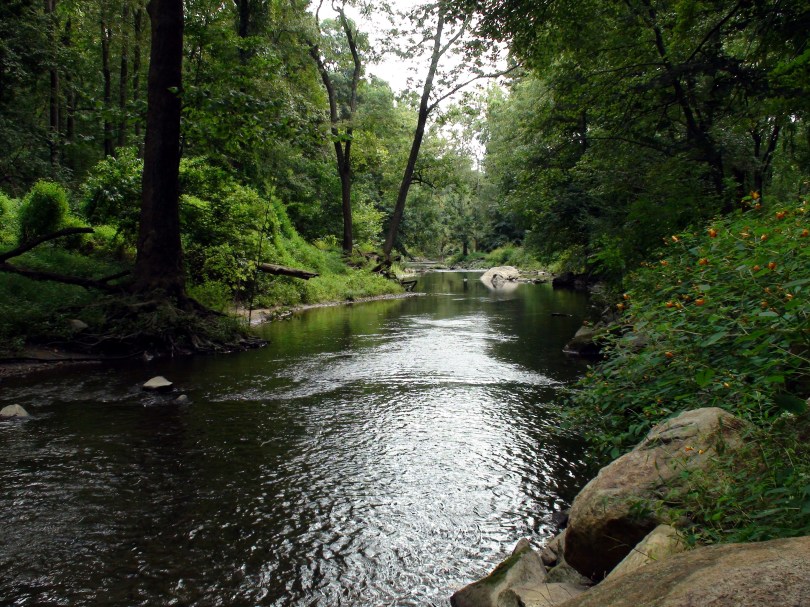
Image from Wikimedia Commons

Flash Fiction: The Weaver Queen

This piece of flash fiction was written for Writer’s Digest’s 2021 February Flash Fiction Challenge Day 10. I spent one and a half hours on this story; this is the fourth draft. The prompt: “Write about an animal. Real or imaginary, the choice is yours!”

The Weaver Queen

One day, deep, deep within the lush jungles of the Amazon and high in the capacious treetop nests of a Weaver ant queendom, a new queen hatched from her egg. Through random mutation, this queen was born with advanced cognitive ability that went far beyond simple instinct. The queen grew and thrived in the colony. It also plotted and schemed, something other ants never did. Instead of founding a new queendom, as most Weaver queens did when they came of age, this intelligent queen overthrew the old one and took control of the colony. 

With an already thriving and powerful colony of workers and warriors, the new queen swiftly used her superior intellect to expand her queendom’s borders. This queen spawned thousands upon thousands of eggs that hatched as larvae with the same higher cognitive ability as their queen mother. Through her, the queendom’s more intelligent armies outsmarted the neighboring queendoms with tactics and stratagems never before employed by ant-kind. The queen also expanded their husbandry of other organisms to include not only a larger array of insects but also worms and amphibians. Such control of other organisms expanded the sources of nourishment the ants could consume and also aided in their conquests.

After having spawned many generations of intelligent broods, the queen perished, overthrown by a queen she herself spawned, this one even more intelligent but with the same desire to conquer, expand, and consume. This cycle continued generation after generation of queens until the single Weaver ant queendom controlled the whole of the Amazon. 

Then quadrillions of Weaver ants spilled from the jungle in massive tidal waves to consume new lands. 

Humans never stood a chance.


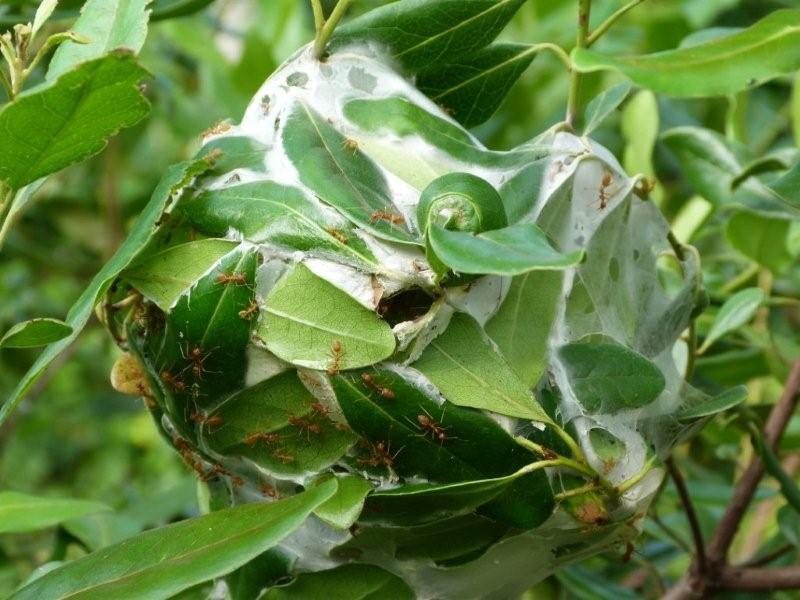
Image from safari-ecology.blogspot.com.

2021 February Flash Fiction Challenge Week One Completed!

Just posted the seventh story I’ve written for Writer’s Digest’s 2021 February Flash Fiction Challenge. It has been a fun ride so far. Challenging, but fun. I’ve had to stretch my creativity for a few prompts, and I’ve delved into the realm of absurdity more than I have before. I’m looking forward to the stories the next week brings!

All the stories I’ve written for the challenge can be found on this page under the section titled “WRITER’S DIGEST’S FEBRUARY FLASH FICTION CHALLENGE“: Story Sketchbook